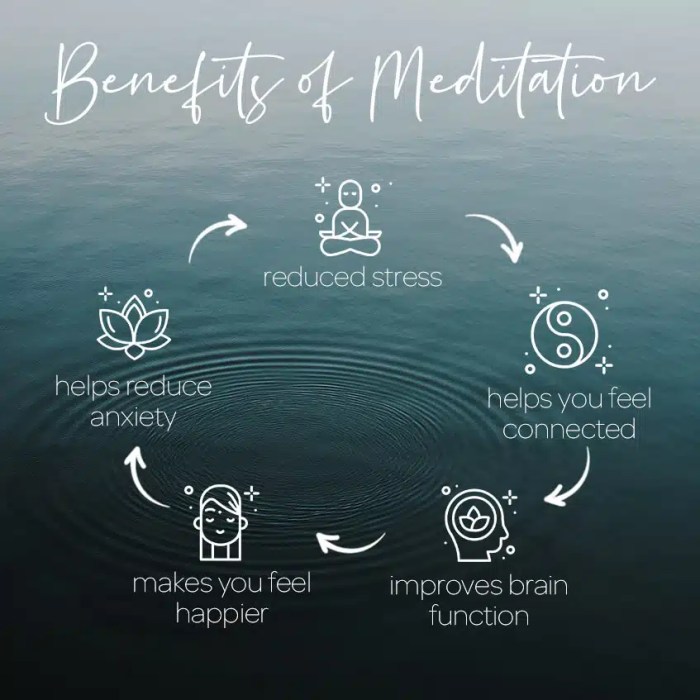
Benefits of mindfulness meditation for mental wellness delves into the positive impact of mindfulness practices on mental health, highlighting the importance of incorporating meditation into daily routines for overall well-being. As we explore the various benefits and strategies, it becomes evident how mindfulness can transform one’s mental state and promote a healthier mindset.
Benefits of Mindfulness Meditation for Mental Wellness
Mindfulness meditation is a powerful practice that can significantly enhance mental well-being. By cultivating awareness of the present moment without judgment, individuals can experience a wide range of benefits that positively impact their mental health.
Improved Mental Health
- Reduction in symptoms of anxiety and depression.
- Enhanced ability to manage stress and cope with challenging situations.
- Increased self-awareness and self-compassion.
Emotional Balance
- Regulation of emotions and decreased reactivity to negative stimuli.
- Greater resilience in the face of adversity.
- Improved relationships through better emotional regulation.
Positive Mindset Promotion
- Encourages a more optimistic outlook on life.
- Enhances gratitude and appreciation for the present moment.
- Reduces rumination and negative thought patterns.
Balanced Diet for Mental Wellness: Benefits Of Mindfulness Meditation For Mental Wellness
Having a balanced diet is crucial for maintaining good mental health. The food we eat directly impacts our brain function and emotional well-being, making it essential to prioritize nutrient-rich foods.
Importance of Nutrient-Rich Foods
Nutrient-rich foods play a key role in supporting mental well-being by providing the necessary vitamins, minerals, and antioxidants that the brain needs to function optimally. These foods can help regulate mood, reduce stress, and improve cognitive function.
- Fatty Fish: Rich in omega-3 fatty acids, fatty fish like salmon and trout can help reduce symptoms of depression and anxiety.
- Leafy Greens: Vegetables like spinach and kale are packed with vitamins and minerals that support brain health and improve overall mood.
- Berries: Blueberries, strawberries, and other berries contain antioxidants that protect the brain from oxidative stress and may help enhance memory.
- Nuts and Seeds: Almonds, walnuts, and flaxseeds are high in healthy fats and nutrients that promote brain function and reduce inflammation.
Connection Between Nutrition and Mental Wellness
Proper nutrition is closely linked to improved mental wellness as it provides the essential building blocks for neurotransmitters, which regulate mood and behavior. A diet rich in nutrient-dense foods can help prevent mental health conditions and support overall well-being.
Physical Fitness and Mental Wellness

Regular exercise is not only beneficial for physical health but also plays a crucial role in maintaining mental well-being. The relationship between physical fitness and mental wellness is interconnected, with exercise having a positive impact on various aspects of mental health.
Benefits of Regular Exercise for Mental Health
Regular physical activity can help reduce symptoms of anxiety, depression, and stress. Exercise stimulates the production of endorphins, also known as “feel-good” hormones, which can improve mood and overall well-being. Additionally, engaging in regular exercise can enhance cognitive function, boost self-esteem, and promote better sleep patterns.
- Cardiovascular exercises like running, cycling, or swimming can help reduce symptoms of anxiety and depression by increasing the production of endorphins.
- Strength training exercises such as weightlifting or bodyweight exercises can improve self-esteem and body image, leading to a more positive outlook on life.
- Yoga and Pilates are excellent forms of exercise that focus on mindfulness, breathing techniques, and relaxation, which can help reduce stress levels and promote mental clarity.
Tips for Incorporating Physical Fitness into a Healthy Lifestyle
It’s essential to find physical activities that you enjoy and can realistically incorporate into your routine. Setting realistic goals, staying consistent, and varying your workouts to prevent boredom are key to maintaining a regular exercise regimen. Additionally, combining exercise with mindfulness practices like meditation can further enhance the mental health benefits of physical fitness.
Remember, physical fitness is not just about how you look, but more importantly, how you feel both mentally and emotionally.
Adequate Hydration and Mental Wellness
Staying adequately hydrated is crucial for maintaining good mental well-being. Dehydration can have a significant impact on mental health, affecting cognitive functions and mood stability.
Importance of Hydration for Mental Wellness
Proper hydration is essential for optimal brain function as the brain is made up of about 75% water. Dehydration can lead to difficulties in concentration, memory issues, and increased feelings of anxiety and stress.
Tips for Staying Hydrated to Support Mental Wellness
- Carry a reusable water bottle with you throughout the day to remind yourself to drink water regularly.
- Set reminders on your phone or computer to take water breaks at regular intervals.
- Infuse your water with fruits or herbs to add flavor and make it more enjoyable to drink.
- Include hydrating foods in your diet such as water-rich fruits and vegetables like watermelon, cucumber, and oranges.
Drinks that Improve Mental Health
There are certain beverages that can help improve mental health by providing hydration and essential nutrients:
- Green Tea:Rich in antioxidants and L-theanine, green tea can promote relaxation and reduce stress.
- Water:The most essential drink for hydration, water helps maintain optimal brain function and overall mental well-being.
- Coconut Water:Packed with electrolytes, coconut water replenishes fluids and can help prevent dehydration.
- Herbal Teas:Chamomile, peppermint, and lavender teas have calming properties that can aid in reducing anxiety and improving sleep quality.
Stress Management Techniques for Mental Wellness
Stress management plays a crucial role in improving mental health by helping individuals cope with challenges, reduce anxiety, and enhance overall well-being.
Impact of Chronic Stress on Mental Well-being
Chronic stress can have detrimental effects on mental health, leading to increased risk of anxiety, depression, and other mental disorders. Prolonged exposure to stress hormones can also weaken the immune system and contribute to physical health issues.
Effective Stress Management Techniques
- Practicing mindfulness meditation: Mindfulness meditation can help individuals focus on the present moment, reduce rumination, and promote relaxation.
- Engaging in physical exercise: Regular exercise can release endorphins, improve mood, and reduce stress levels.
- Deep breathing exercises: Deep breathing techniques can help calm the nervous system and reduce stress and anxiety.
- Journaling: Writing down thoughts and emotions can provide a healthy outlet for processing stress and promoting self-reflection.
- Setting boundaries: Establishing boundaries in relationships and work can help reduce stress and prevent burnout.
Tips for Incorporating Stress-relief Practices into Daily Life
- Start the day with a short meditation or mindfulness practice to set a positive tone for the day.
- Take short breaks throughout the day to practice deep breathing or engage in physical activity.
- Schedule regular self-care activities such as reading, taking a bath, or spending time in nature.
- Practice gratitude by keeping a gratitude journal and reflecting on the things you are thankful for.
- Seek support from friends, family, or a therapist to discuss and manage stressors effectively.
Preventive Care for Mental Wellness
Preventive care for mental wellness plays a crucial role in maintaining overall well-being and preventing the onset of mental health issues.
By implementing preventive measures, individuals can take proactive steps to safeguard their mental health and reduce the risk of developing conditions such as anxiety, depression, and stress-related disorders.
Importance of Regular Exercise
- Engaging in regular physical activity can help reduce symptoms of anxiety and depression by releasing endorphins, which are known as the body’s natural mood elevators.
- Exercise also promotes better sleep quality, enhances self-esteem, and improves overall cognitive function, contributing to better mental wellness.
- Examples of preventive care strategies include participating in activities such as yoga, jogging, swimming, or dancing to boost mental health.
Healthy Eating Habits
- Maintaining a balanced diet rich in nutrients such as omega-3 fatty acids, vitamins, and minerals can support brain function and improve mood stability.
- Consuming foods like fatty fish, fruits, vegetables, whole grains, and nuts can help regulate neurotransmitters in the brain and reduce the risk of mental health disorders.
- Tips for proactive approaches to mental health maintenance include meal planning, mindful eating practices, and avoiding excessive consumption of processed foods and sugary snacks.
Mindfulness and Relaxation Techniques
- Practicing mindfulness meditation, deep breathing exercises, or progressive muscle relaxation can help alleviate stress, anxiety, and promote emotional well-being.
- Engaging in activities such as journaling, spending time in nature, or listening to calming music can also contribute to preventive care for mental wellness.
- By incorporating relaxation techniques into daily routines, individuals can build resilience against mental health challenges and enhance overall psychological health.
Quality Sleep and Mental Wellness
Quality sleep plays a significant role in maintaining good mental health. It is during sleep that our brain processes emotions, consolidates memories, and restores energy for the next day. Poor sleep quality can have a detrimental impact on our mental well-being, leading to mood swings, irritability, and difficulty concentrating.
The Importance of Sleep for Mental Health, Benefits of mindfulness meditation for mental wellness
Quality sleep is vital for our overall mental wellness as it allows our brain to recharge and function optimally. Without sufficient rest, our cognitive abilities, emotional regulation, and stress management can be severely affected.
How Sleep Patterns Affect Mental Well-being
Disrupted sleep patterns, such as insomnia or irregular sleeping hours, can disrupt the balance of neurotransmitters in the brain, leading to mood disorders like anxiety and depression. Consistent sleep routines help regulate these neurotransmitters and promote emotional stability.
The Impact of Sleep Deprivation on Mental Health
Sleep deprivation can impair cognitive function, memory retention, and decision-making abilities. It can also increase the risk of developing mental health conditions such as depression and anxiety. Chronic sleep deprivation can exacerbate existing mental health issues and make them harder to manage.
Tips for Improving Sleep Quality for Mental Wellness
- Establish a bedtime routine and stick to a consistent sleep schedule.
- Create a calming sleep environment free of distractions and electronic devices.
- Avoid caffeine, heavy meals, and stimulating activities close to bedtime.
- Engage in relaxation techniques such as deep breathing or meditation before sleep.
- Seek professional help if you have persistent sleep problems that impact your mental well-being.
Holistic Health Approaches for Mental Wellness
Holistic health focuses on treating the whole person, considering physical, mental, emotional, and spiritual aspects to achieve overall well-being. When it comes to mental wellness, holistic approaches emphasize the interconnectedness of mind, body, and spirit in promoting mental health.
Benefits of Holistic Approaches for Mental Health
- Addressing root causes: Holistic practices aim to identify and address the underlying causes of mental health issues, rather than just treating symptoms.
- Promoting balance: By focusing on multiple aspects of health, holistic approaches help individuals achieve balance in their lives, which is essential for mental well-being.
- Empowerment: Holistic practices empower individuals to take an active role in their mental health by providing tools and techniques for self-care.
Examples of Holistic Practices
- Mindfulness meditation: Cultivating mindfulness through meditation can help reduce stress, anxiety, and improve overall mental well-being.
- Yoga: Practicing yoga not only benefits physical health but also promotes mental clarity, relaxation, and emotional balance.
- Nutrition: Eating a balanced diet rich in nutrients can support brain function and mood regulation, contributing to mental wellness.
Tips for Embracing a Holistic Lifestyle
- Engage in regular physical activity: Exercise is not only beneficial for your body but also has positive effects on mental health, releasing endorphins that boost mood.
- Practice self-care: Take time to engage in activities that bring you joy and relaxation, whether it’s reading a book, taking a bath, or spending time in nature.
- Cultivate social connections: Building strong relationships and a support system can help promote mental wellness and provide a sense of belonging.
Epilogue
In conclusion, Benefits of mindfulness meditation for mental wellness underscores the powerful effects of mindfulness on mental health, emphasizing the need to prioritize self-care and mindfulness practices in our daily lives for improved overall wellness. By embracing these techniques, individuals can cultivate a more positive and balanced mental state, leading to a more fulfilling and harmonious life.
User Queries
How often should I practice mindfulness meditation for optimal mental wellness?
It’s recommended to practice mindfulness meditation daily for at least 10-15 minutes to experience the full benefits on mental well-being.
Can mindfulness meditation help with anxiety and depression?
Yes, mindfulness meditation has shown to be effective in reducing symptoms of anxiety and depression by promoting relaxation and emotional balance.
Is mindfulness meditation suitable for everyone, regardless of age?
Absolutely, mindfulness meditation can be beneficial for individuals of all ages, from children to the elderly, in improving mental wellness and overall quality of life.


