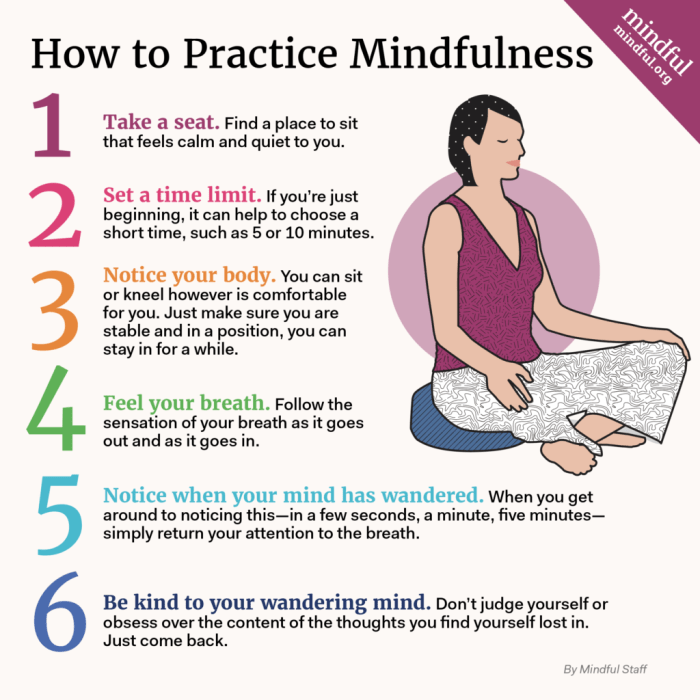
With How to use mindfulness practices for emotional regulation at the forefront, this paragraph opens a window to an amazing start and intrigue, inviting readers to embark on a journey of self-discovery through mindfulness practices. Throughout this guide, you will explore various techniques and strategies to enhance emotional balance and well-being.
The journey begins with understanding the essence of mindfulness and its profound impact on emotional regulation. As you delve deeper, you will uncover practical tips on incorporating mindfulness into your daily routine, managing stress effectively, fostering mindful eating habits, integrating physical fitness with mindfulness, embracing self-care practices, optimizing sleep quality, and nurturing emotional wellness through hydration.
Prepare to unlock the transformative power of mindfulness in enhancing your emotional resilience and overall quality of life.
Introduction to Mindfulness Practices for Emotional Regulation
Mindfulness is the practice of being fully present and aware of our thoughts, emotions, and sensations in the present moment without judgment. It plays a crucial role in emotional regulation by helping us become more attuned to our feelings and reactions, allowing us to respond to situations with greater clarity and control.
Using mindfulness techniques for managing emotions offers a wide range of benefits, including reduced stress levels, improved self-awareness, increased emotional resilience, and better overall mental well-being. By cultivating mindfulness, individuals can develop a deeper understanding of their emotions and learn to navigate them more effectively.
Mindfulness Techniques for Emotional Balance
- Body Scan: This involves focusing on different parts of the body to notice any tension or discomfort, helping to release physical and emotional stress.
- Deep Breathing: Taking slow, deep breaths can help calm the nervous system and bring a sense of relaxation during moments of heightened emotion.
- Mindful Walking: Engaging in a slow, deliberate walk while paying attention to each step can ground us in the present moment and alleviate overwhelming feelings.
- Loving-Kindness Meditation: This practice involves sending well-wishes to ourselves and others, fostering compassion and empathy to soothe emotional distress.
Incorporating Mindfulness into Daily Routine
Integrating mindfulness practices into your daily routine can have a profound impact on your emotional well-being. Consistency is key to reaping the benefits of mindfulness, as it helps in managing stress, anxiety, and overall emotional regulation.
Tip 1: Start Your Day with Mindfulness
- Begin your day with a mindful activity such as meditation, deep breathing exercises, or a mindful walk.
- Set aside a few minutes each morning to focus on your breath and bring awareness to the present moment.
- Starting your day mindfully can help you approach challenges with a calmer and more centered mindset.
Tip 2: Incorporate Mindfulness into Daily Tasks
- Practice mindfulness while doing everyday activities like eating, showering, or walking.
- Focus on the sensations, smells, and sounds around you, bringing your attention fully to the present moment.
- Engaging in tasks mindfully can help reduce stress and improve focus and productivity.
Tip 3: Schedule Mindful Breaks Throughout the Day
- Take short breaks during your day to practice mindfulness, even if it’s just for a few minutes.
- Use these breaks to check in with yourself, breathe deeply, and release any tension or stress you may be holding onto.
- Regular mindful breaks can help you stay grounded and maintain emotional balance amidst daily challenges.
Mindfulness Practices for Stress Management
When it comes to managing stress, mindfulness practices can play a crucial role in helping individuals reduce their stress levels and improve their overall well-being.
Mindful Breathing
One effective mindfulness exercise for stress relief is mindful breathing. This involves focusing your attention on your breath, taking deep breaths in and out, and observing the sensations as you inhale and exhale. Mindful breathing can help calm the mind, reduce anxiety, and promote relaxation.
Body Scan Meditation
Another mindfulness practice for stress management is body scan meditation. This involves bringing awareness to different parts of your body, starting from your toes and moving up to your head. By paying attention to the physical sensations in each body part, you can release tension and stress stored in the body.
Walking Meditation
Engaging in walking meditation is another way to incorporate mindfulness into your daily routine for stress relief. This practice involves walking slowly and deliberately, focusing on each step and the sensations in your body as you move. Walking meditation can help ground you in the present moment and alleviate stress and anxiety.
Mindful Eating for Emotional Balance
Mindful eating is a practice that involves paying full attention to the experience of eating and drinking, both inside and outside the body. It focuses on the sensations, thoughts, and emotions that arise during meals, helping individuals develop a healthier relationship with food and their bodies.
When it comes to emotional regulation, mindful eating can have a significant impact. By being fully present and aware of what we are consuming, we can better understand our hunger cues, identify emotional triggers for overeating, and make more conscious choices that support our overall well-being.
Tips for Practicing Mindful Eating
- Avoid distractions while eating, such as watching TV or scrolling through your phone.
- Take time to appreciate the colors, textures, and flavors of your food.
- Chew slowly and savor each bite, noticing how the food tastes and feels in your mouth.
- Listen to your body’s hunger and fullness signals to guide when to start and stop eating.
- Be mindful of emotional cues that may be driving your desire to eat, and find alternative ways to address those emotions.
The Relationship Between Food Choices and Emotional Well-being
Our food choices can have a direct impact on our emotional well-being. Eating a balanced diet rich in nutrients can support brain function and mood regulation, while consuming excessive amounts of processed foods, sugar, or caffeine can lead to mood swings and energy crashes.
By practicing mindful eating and making conscious food choices, we can cultivate a positive relationship with food, improve our emotional regulation, and support our overall mental health.
Physical Fitness and Mindfulness: How To Use Mindfulness Practices For Emotional Regulation
Regular physical fitness activities can significantly complement mindfulness practices for emotional regulation. Engaging in mindful exercises like yoga or tai chi helps individuals connect their mind and body, promoting a sense of calmness and relaxation. This combination of physical activity and mindfulness can contribute to overall well-being by reducing stress, improving focus, and enhancing emotional resilience.
Mindful Exercises for Emotional Regulation
- Yoga: Yoga involves a series of poses, breathing techniques, and meditation that promote mindfulness and relaxation. Practicing yoga regularly can help reduce anxiety, improve mood, and increase self-awareness.
- Tai Chi: Tai Chi is a gentle form of martial arts that focuses on slow, flowing movements and deep breathing. This mind-body practice enhances balance, flexibility, and mental clarity while reducing stress and promoting emotional stability.
Benefits of Combining Physical Fitness with Mindfulness
- Stress Reduction: Physical activity releases endorphins that help alleviate stress, while mindfulness practices enhance awareness and acceptance of emotions, leading to a more balanced response to stressors.
- Improved Mental Health: The combination of physical fitness and mindfulness can reduce symptoms of anxiety and depression, improve mood regulation, and boost overall mental well-being.
- Enhanced Physical Health: Regular exercise improves cardiovascular health, strengthens muscles, and increases flexibility, while mindfulness practices can help individuals listen to their body’s needs and prevent overexertion.
Hydration and Mindfulness
Staying hydrated is crucial for maintaining emotional balance as dehydration can lead to irritability, fatigue, and difficulty concentrating. Incorporating mindfulness into your hydration routine can help you stay present and aware of your body’s needs.
Importance of Hydration for Emotional Well-being, How to use mindfulness practices for emotional regulation
- Hydration plays a key role in regulating mood and emotions by supporting brain function and cognitive performance.
- Dehydration can exacerbate stress and anxiety, making it essential to prioritize adequate water intake for emotional well-being.
- By practicing mindfulness while drinking water, you can enhance your awareness of your body’s signals and improve your overall emotional state.
Tips for Incorporating Mindfulness into Hydration
- Before drinking water, take a moment to pause and appreciate the act of nourishing your body.
- Focus on the sensation of drinking water, noticing the temperature, taste, and how it feels as it hydrates your body.
- Practice mindful breathing while hydrating, taking slow, deep breaths to enhance the calming effects of staying present.
The Link Between Hydration, Mindfulness, and Emotional Well-being
- Hydrating mindfully can help you connect with your body’s needs and promote a sense of balance and well-being.
- By being present in the moment while drinking water, you can reduce stress and improve your ability to manage emotions effectively.
- Consistent hydration combined with mindfulness practices can contribute to a more grounded and emotionally stable state.
Self-Care Practices for Emotional Wellness
Self-care activities play a crucial role in promoting emotional balance and overall mental wellness. By incorporating mindfulness practices into self-care routines, individuals can effectively manage their emotions and enhance their well-being.
Examples of Self-Care Activities
- Engage in regular exercise such as yoga or walking to release endorphins and reduce stress levels.
- Practice deep breathing exercises or meditation to calm the mind and increase mindfulness.
- Allocate time for hobbies or activities that bring joy and relaxation, such as painting, gardening, or reading.
- Establish healthy boundaries with work and social commitments to prevent burnout and prioritize self-care.
- Connect with loved ones or seek support from a therapist to express emotions and receive guidance during challenging times.
Role of Self-Care in Mental Wellness
Self-care routines that include mindfulness practices are essential for maintaining mental wellness. By taking time for self-care activities, individuals can recharge, reduce stress, and cultivate a positive mindset. This, in turn, enhances emotional regulation, improves resilience, and fosters a sense of well-being.
Self-Care Routines with Mindfulness Practices
- Start the day with a mindful morning routine, incorporating gratitude journaling or mindful stretching to set a positive tone for the day.
- Practice mindful eating by savoring each bite, paying attention to hunger cues, and choosing nourishing foods that support emotional balance.
- Engage in mindfulness-based stress reduction techniques like body scans or progressive muscle relaxation to release tension and promote relaxation.
- End the day with a calming bedtime routine, such as a warm bath, gentle yoga, or guided meditation to unwind and prepare for restful sleep.
Quality Sleep and Emotional Regulation
Proper sleep plays a crucial role in emotional stability, as it allows the body and mind to rest and recharge, leading to better regulation of emotions. When we lack quality sleep, our emotional responses can become heightened, leading to increased stress, irritability, and difficulty in managing our feelings.
Tips for Improving Sleep Quality with Mindfulness Techniques
- Establish a bedtime routine that includes relaxation techniques such as deep breathing or meditation to calm the mind before sleep.
- Avoid screens and stimulating activities before bed, opting instead for reading or gentle stretching to promote relaxation.
- Practice mindfulness while lying in bed by focusing on your breath or body sensations to quiet the mind and prepare for sleep.
- Avoid caffeine and heavy meals close to bedtime, as they can disrupt sleep patterns and affect the quality of rest.
Impact of Mindfulness on Achieving a Restful Night’s Sleep
Mindfulness practices can significantly improve sleep quality by reducing stress and anxiety levels, promoting relaxation, and enhancing overall well-being. By incorporating mindfulness into your bedtime routine, you can create a peaceful environment that allows for a deep and restorative sleep.
This, in turn, supports emotional well-being by ensuring you wake up feeling refreshed and better equipped to handle daily challenges.
Last Recap
In conclusion, the journey of utilizing mindfulness practices for emotional regulation is an empowering path towards holistic well-being. By embracing the principles of mindfulness in your daily life, you are equipped with invaluable tools to navigate the complexities of emotions with grace and mindfulness.
As you continue to explore the profound connection between mindfulness and emotional balance, remember that the practice of mindfulness is a lifelong journey of self-discovery and growth. Embrace the transformative power of mindfulness and embark on a fulfilling journey towards emotional well-being.
Answers to Common Questions
How often should I practice mindfulness for emotional regulation?
Consistency is key when it comes to mindfulness practices. Aim to incorporate mindfulness into your daily routine, even if it’s just for a few minutes each day, to experience its full benefits.
Can mindfulness help with managing intense emotions?
Absolutely. Mindfulness allows you to observe your emotions without judgment, giving you the space to respond thoughtfully rather than react impulsively. It can be a powerful tool in managing intense emotions effectively.
Are there specific mindfulness techniques for stress relief?
Yes, there are various mindfulness exercises tailored to reduce stress levels, such as deep breathing, body scan meditation, and loving-kindness meditation. Exploring these techniques can help in alleviating stress and promoting emotional balance.
How does mindful eating contribute to emotional well-being?
Mindful eating encourages you to be present and attentive while consuming food, fostering a healthier relationship with eating habits. By being mindful of your eating choices and habits, you can improve emotional balance and overall well-being.
Is there a connection between hydration and emotional balance?
Absolutely. Staying hydrated is essential for optimal brain function and emotional well-being. By incorporating mindfulness into your hydration routines, you can enhance your overall emotional balance and mental clarity.


