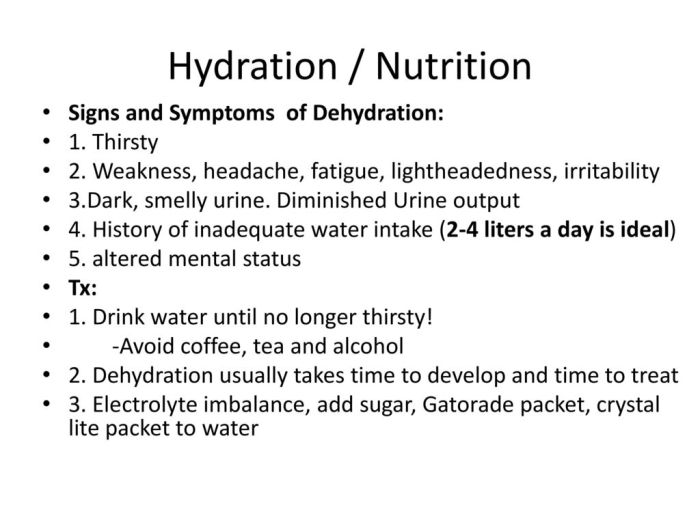
Signs and symptoms of inadequate hydration take center stage in this informative piece, offering a detailed exploration of the impact of dehydration on the body. Dive into the common indicators and effects of insufficient hydration for a comprehensive understanding of this crucial topic.
In the following sections, we will delve into the consequences of dehydration on physical performance, mental well-being, and overall health, providing valuable insights and practical tips for maintaining proper hydration levels.
Signs and Symptoms of Inadequate Hydration
Dehydration occurs when the body loses more fluids than it takes in, leading to an imbalance that can have various negative effects on overall health and well-being. Let’s explore the common signs and symptoms associated with inadequate hydration.
Common Signs of Dehydration in the Body
- Dry mouth and increased thirst
- Dark yellow urine or decreased urine output
- Fatigue and weakness
- Dizziness or lightheadedness
- Headache
- Dry skin
How Dehydration Affects Physical Performance
Dehydration can significantly impact physical performance by reducing endurance, strength, and overall energy levels. When the body lacks proper hydration, muscles may cramp more easily, and coordination and concentration can be compromised.
Symptoms of Mild versus Severe Dehydration
- Mild Dehydration:Mild dehydration may present with symptoms such as increased thirst, dry mouth, fatigue, and dark yellow urine. It can usually be resolved by drinking fluids and rehydrating.
- Severe Dehydration:Severe dehydration is a more serious condition that may lead to extreme thirst, very dry mouth, sunken eyes, rapid heartbeat, confusion, and even unconsciousness. Immediate medical attention is required in cases of severe dehydration.
Balanced Diet
Maintaining a balanced diet is essential for overall health and well-being. Hydration plays a crucial role in this aspect as it helps in various bodily functions, including digestion, nutrient absorption, and waste elimination.
Hydrating Foods in a Balanced Diet
Including hydrating foods in your diet can contribute to your overall hydration levels. Some examples of hydrating foods to incorporate into a balanced diet are:
- Cucumbers: With a water content of over 95%, cucumbers are a great hydrating snack option.
- Watermelon: This fruit is not only delicious but also contains a high water content, helping you stay hydrated.
- Leafy greens: Vegetables like lettuce, spinach, and kale are rich in water and provide essential nutrients.
- Broths and soups: Consuming clear broths or vegetable-based soups can also contribute to your hydration levels.
- Coconut water: A natural source of electrolytes, coconut water is a hydrating beverage option.
Impact of Hydration on Nutrient Absorption
Proper hydration is crucial for optimal nutrient absorption from food. Adequate water intake helps in the digestion process by breaking down food particles and aiding in the absorption of nutrients in the intestines. Dehydration can lead to poor digestion and nutrient absorption, affecting overall health and well-being.
Mental Wellness
Proper hydration is not only essential for physical health but also plays a crucial role in maintaining mental well-being. Dehydration can have negative impacts on cognitive function and mood, affecting our overall mental sharpness and performance.
Effects of Dehydration on Cognitive Function and Mood
Dehydration can lead to decreased cognitive abilities such as difficulty concentrating, memory problems, and reduced mental clarity. Studies have shown that even mild dehydration can impair cognitive performance, making it harder to focus and make decisions.
Staying hydrated is key to maintaining optimal brain function and mental agility.
In addition to cognitive effects, dehydration can also impact mood. Dehydration has been linked to feelings of irritability, anxiety, and even depression. When our bodies lack proper hydration, it can affect our mood stability and emotional well-being.
Strategies for Staying Mentally Sharp by Staying Hydrated
- Carry a reusable water bottle with you throughout the day to ensure easy access to hydration.
- Set reminders or create a schedule to drink water regularly, especially if you tend to forget.
- Incorporate hydrating foods such as fruits and vegetables into your diet to supplement your water intake.
- Avoid excessive intake of dehydrating beverages such as alcohol and caffeinated drinks.
- Monitor your urine color as a simple indicator of hydration levels – pale yellow to clear urine is a good sign of adequate hydration.
Physical Fitness
Hydration plays a crucial role in physical exercise and fitness, as it affects performance, recovery, and overall well-being.
Importance of Hydration for Physical Exercise
Proper hydration is essential for maintaining optimal performance during workouts. Water helps regulate body temperature, lubricate joints, and transport nutrients to muscles. Dehydration can lead to fatigue, muscle cramps, dizziness, and decreased endurance.
- Drink water before, during, and after exercise to prevent dehydration.
- Monitor your fluid intake by paying attention to thirst cues and the color of your urine.
- Consider electrolyte-replenishing drinks for intense workouts lasting longer than an hour.
- Aim to drink at least 8-10 cups of water per day, adjusting based on your activity level and sweat rate.
Adequate Hydration
Proper hydration is essential for the body to function optimally. It refers to maintaining a balance between the intake and loss of fluids to ensure that the body’s cells are adequately hydrated.
Recommended Daily Water Intake
It is recommended that individuals consume a certain amount of water each day to stay properly hydrated. The daily water intake can vary based on age groups:
- Infants (0-6 months): Approximately 0.7 liters per day from breast milk or formula.
- Children (1-3 years): About 1 liter per day, including fluids from milk and other beverages.
- Children (4-8 years): Around 1.2 liters per day from water and other beverages.
- Boys (9-13 years): Approximately 2.4 liters per day, including fluids from food and beverages.
- Girls (9-13 years): About 2.1 liters per day, including fluids from food and beverages.
- Teenagers (14-18 years): Around 3.3 liters per day for boys and 2.3 liters per day for girls.
- Adults (19 years and older): Approximately 3.7 liters per day for men and 2.7 liters per day for women.
Tracking and Ensuring Proper Hydration
There are several methods to help track and ensure proper hydration levels:
- Carry a reusable water bottle and aim to drink water throughout the day.
- Monitor urine color – pale yellow or clear urine indicates adequate hydration.
- Include hydrating foods in your diet, such as fruits and vegetables with high water content.
- Set reminders or use apps to prompt you to drink water regularly.
- Adjust water intake based on your activity level, environment, and individual needs.
Regular Exercise
Regular exercise is crucial for maintaining overall health and well-being. When it comes to hydration, the impact of adequate fluid intake becomes even more significant during and after workouts. Proper hydration plays a vital role in supporting exercise performance, optimizing recovery, and preventing dehydration-related complications.
Hydration Impact on Recovery Post-Exercise
After a strenuous workout, your body needs to replenish the fluids lost through sweat to aid in the recovery process. Dehydration can prolong the recovery time, increase muscle soreness, and negatively affect performance in subsequent workouts. By staying hydrated post-exercise, you can speed up the recovery process, reduce muscle fatigue, and enhance overall exercise efficiency.
Connection Between Hydration and Muscle Function During Workouts
During exercise, the body relies on adequate hydration to maintain optimal muscle function. Dehydration can lead to muscle cramps, decreased strength, and impaired coordination, affecting your workout performance. By staying properly hydrated before, during, and after exercise, you can ensure that your muscles are functioning at their best, allowing you to exercise more effectively and with reduced risk of injury.
Guidelines for Hydrating Before, During, and After Exercise
- Before Exercise: Drink about 17-20 ounces of water 2-3 hours before your workout to ensure you are adequately hydrated.
- During Exercise: Drink 7-10 ounces of water every 10-20 minutes during your workout to replace fluids lost through sweat and maintain hydration levels.
- After Exercise: Rehydrate by drinking 16-24 ounces of water for every pound lost during exercise to replenish fluid levels and support the recovery process.
Healthy Lifestyle
Hydration is crucial for maintaining a healthy lifestyle as it plays a key role in various bodily functions. Adequate hydration supports digestion, nutrient absorption, circulation, temperature regulation, and overall well-being.
Importance of Hydration in Overall Well-Being
- Proper hydration helps in flushing out toxins from the body and supports kidney function.
- Hydration is essential for maintaining healthy skin, as it keeps the skin hydrated and helps in preventing dryness and premature aging.
- Being well-hydrated can improve cognitive function and concentration levels, leading to better overall mental wellness.
- Hydration is crucial for physical performance and exercise recovery, as dehydration can lead to fatigue and decreased stamina.
Habits for a Well-Hydrated and Healthy Lifestyle
- Carry a reusable water bottle with you throughout the day to ensure you are drinking an adequate amount of water.
- Include hydrating foods in your diet such as fruits and vegetables, which have high water content.
- Set reminders or create a schedule to drink water regularly, especially during physical activity or in hot weather.
- Avoid excessive consumption of sugary drinks and opt for water as the primary source of hydration.
Nutrient-Rich

When it comes to maintaining nutrient-rich cells in the body, hydration plays a crucial role in ensuring proper absorption and utilization of essential nutrients.
Influence on Nutrient Absorption
The presence of an adequate amount of water in the body is vital for the absorption of nutrients from the food we consume. Water helps dissolve nutrients and deliver them to various parts of the body where they are needed for optimal functioning.
Importance of Water for Nutrient-Rich Cells
Water is essential for maintaining nutrient-rich cells as it helps transport nutrients to the cells and facilitate metabolic processes. Without adequate hydration, cells may not receive the necessary nutrients, leading to deficiencies and impaired cellular function.
Impact on Nutrient Utilization
- Hydration aids in the breakdown of nutrients in the digestive system, allowing for better absorption and utilization by the body.
- Water helps in the transport of nutrients through the bloodstream to various tissues and organs, ensuring they reach their intended destination.
- Proper hydration supports the elimination of waste products produced during the metabolism of nutrients, maintaining a healthy balance in the body.
Stress Management
Dehydration can have a significant impact on stress levels and anxiety. When the body is not properly hydrated, it can lead to increased cortisol levels, which is the hormone responsible for stress. Therefore, staying hydrated is crucial for managing stress effectively.
Benefits of Hydration for Stress Relief
- Proper hydration helps to regulate cortisol levels in the body, reducing stress and anxiety.
- Drinking enough water can improve cognitive function and overall mood, leading to better stress management.
- Hydration plays a key role in maintaining a healthy nervous system, which is essential for stress resilience.
Relaxation Techniques Incorporating Hydration
- Practice deep breathing exercises while sipping on water to calm the mind and body.
- Take a warm bath with added hydrating bath salts to relax muscles and hydrate the skin.
- Engage in yoga or meditation sessions with a focus on mindful hydration to alleviate stress and promote relaxation.
Preventive Care
Proper hydration plays a crucial role in preventive healthcare by maintaining overall wellness and reducing the risk of various health issues. Dehydration, on the other hand, can lead to a range of health problems if not addressed promptly.
Importance of Staying Hydrated
- Proper hydration helps regulate body temperature and supports essential bodily functions.
- Being well-hydrated can prevent urinary tract infections and kidney stones.
- Hydration supports healthy digestion and can aid in weight management.
Health Issues Caused by Dehydration
- Dehydration can lead to headaches, dizziness, and fatigue.
- Severe dehydration may result in electrolyte imbalances and heat-related illnesses.
- Chronic dehydration can impact cognitive function and mood.
Preventive Care Strategies
- Drink an adequate amount of water throughout the day, especially during hot weather or physical activity.
- Include hydrating foods in your diet, such as fruits and vegetables.
- Monitor your urine color to ensure you are adequately hydrated.
- Carry a reusable water bottle with you to encourage regular hydration.
- Avoid excessive consumption of dehydrating beverages like alcohol and caffeine.
Proper Nutrition
Proper nutrition plays a crucial role in maintaining overall health and well-being. One key aspect of proper nutrition is ensuring adequate hydration, as it directly impacts the body’s ability to utilize nutrients from food effectively.
The Role of Hydration in Maintaining Proper Nutrition
Proper hydration is essential for digestion, absorption, and transportation of nutrients throughout the body. Water helps break down food particles, allowing nutrients to be absorbed more efficiently. Without adequate hydration, the body may struggle to digest and absorb essential nutrients, leading to nutrient deficiencies.
- Stay hydrated throughout the day by drinking water regularly.
- Aim to consume a variety of nutrient-rich foods to ensure a well-rounded diet.
- Avoid excessive consumption of sugary drinks and opt for water as the primary source of hydration.
- Include hydrating foods in your diet, such as fruits and vegetables with high water content.
- Monitor your urine color to ensure you are adequately hydrated – light yellow to clear urine indicates proper hydration.
Quality Sleep
Quality sleep is essential for overall health and well-being. The connection between hydration and quality sleep is often overlooked, but dehydration can significantly impact sleep patterns and overall restfulness.
Effects of Dehydration on Sleep
Dehydration can lead to various sleep disturbances, such as difficulty falling asleep, frequent awakenings during the night, and overall poor sleep quality. When the body is dehydrated, it can affect the body’s natural sleep-wake cycle, making it harder to achieve deep and restorative sleep.
- Dehydration can cause dry mouth and nasal passages, leading to snoring and sleep apnea, which disrupt sleep.
- Electrolyte imbalances due to dehydration can contribute to muscle cramps and restless legs syndrome, interfering with sleep.
- Increased heart rate and body temperature from dehydration can make it harder to relax and fall asleep.
Strategies for Improving Sleep Quality through Adequate Hydration
Proper hydration plays a crucial role in promoting quality sleep. Here are some strategies to ensure you stay adequately hydrated for better sleep:
- Drink water consistently throughout the day to maintain hydration levels.
- Avoid excessive caffeine and alcohol intake, as they can dehydrate the body and disrupt sleep.
- Monitor urine color to assess hydration status
light yellow to clear urine indicates adequate hydration.
- Consider a bedtime routine that includes a glass of water to stay hydrated overnight.
- Include hydrating foods such as fruits and vegetables in your diet to support hydration levels.
Cardio Health
Proper hydration plays a crucial role in maintaining cardiovascular health. Adequate fluid intake can positively impact heart function and overall heart health. Let’s explore how staying hydrated can support your heart.
Effects of Hydration on Cardiovascular Health
- Hydration helps maintain proper blood volume, allowing the heart to pump blood more efficiently.
- Dehydration can lead to increased heart rate and higher blood pressure, putting more strain on the heart.
- Proper hydration supports the delivery of oxygen and nutrients to the heart muscle, promoting optimal function.
Tips for Maintaining Proper Hydration for Heart Health
- Drink an adequate amount of water throughout the day, especially before and after exercise.
- Monitor your urine color to ensure you are adequately hydrated – pale yellow to clear urine is a good indicator.
- Incorporate hydrating foods such as fruits and vegetables into your diet.
- Avoid excessive consumption of caffeinated and alcoholic beverages, as they can contribute to dehydration.
- Consider carrying a reusable water bottle with you to remind yourself to drink water regularly.
Immune Boost
Proper hydration plays a crucial role in supporting the immune system function. When the body is well-hydrated, it can more effectively flush out toxins and support the proper functioning of cells involved in immune response.
Dehydration and Immune Response
Dehydration can weaken the immune response by reducing the production of lymphocytes, which are white blood cells that help fight off infections. Inadequate hydration can also lead to a decrease in the production of antibodies, making the body more susceptible to illnesses.
Immune-Boosting Practices
- Drink an adequate amount of water throughout the day to stay well-hydrated and support immune function.
- Include hydrating foods in your diet such as fruits and vegetables with high water content.
- Avoid excessive consumption of dehydrating substances like alcohol and caffeine.
- Get enough rest and quality sleep to allow the body to repair and regenerate, supporting immune health.
- Engage in regular physical activity to promote circulation and overall wellness, which can indirectly boost immune function.
Positive Mindset
Maintaining a positive mindset is crucial for overall well-being, and proper hydration plays a significant role in supporting mental outlook and positivity. Dehydration can lead to mood swings, irritability, and cognitive impairment, affecting our ability to stay optimistic and focused.
It is essential to prioritize hydration to support a positive mindset and emotional balance.
Impact of Hydration on Mental Outlook
Proper hydration is essential for brain function and mood regulation. Dehydration can lead to decreased cognitive performance, fatigue, and feelings of stress or anxiety. By staying adequately hydrated, you can support optimal brain function, improve focus, and enhance your overall mood and mental outlook.
Practices for Maintaining a Positive Mindset
- Drink water regularly throughout the day to ensure adequate hydration.
- Include hydrating foods in your diet, such as fruits and vegetables with high water content.
- Avoid excessive consumption of dehydrating beverages like alcohol and caffeine.
- Practice mindfulness and relaxation techniques to reduce stress and promote a positive mindset.
- Engage in regular physical activity to boost endorphins and enhance mood.
Clean Eating
Hydration plays a crucial role in supporting a clean eating lifestyle. By staying adequately hydrated, you can help flush out toxins from your body, aid in digestion, and maintain overall health and well-being.
Benefits of Hydration in Clean Eating
Combining hydration with clean eating habits offers numerous benefits, such as:
- Improved digestion and absorption of nutrients
- Enhanced detoxification and elimination of waste products
- Support for healthy skin and hair
- Regulation of body temperature and energy levels
Hydrating Foods for a Healthy Diet
Include these examples of clean, hydrating foods in your diet to support your health and wellness:
| Food | Hydration Benefits |
|---|---|
| Cucumbers | High water content helps in hydration and provides essential vitamins and minerals. |
| Watermelon | Refreshing fruit with high water content, perfect for staying hydrated. |
| Soup | Broth-based soups are hydrating and nutritious, supporting overall health. |
| Leafy Greens | Leafy vegetables like spinach and kale are hydrating and packed with essential nutrients. |
Daily Activity
Staying hydrated plays a vital role in maintaining our energy levels and overall performance throughout the day. Dehydration can lead to fatigue, decreased focus, and reduced productivity, making it essential to prioritize adequate hydration for daily activities.
The Impact of Hydration on Daily Energy Levels
Proper hydration is crucial for sustaining energy levels during daily tasks. When we are dehydrated, our body has to work harder to function, leading to feelings of tiredness and lethargy. By staying hydrated, we can ensure that our energy levels remain steady and that we can tackle our daily activities with optimal efficiency.
Incorporating Hydration into Daily Routines
- Carry a reusable water bottle with you throughout the day to remind yourself to drink water regularly.
- Set reminders on your phone or computer to take water breaks at specific intervals.
- Incorporate hydrating foods such as fruits and vegetables into your meals and snacks.
- Choose water over sugary or caffeinated beverages to maintain proper hydration levels.
Holistic Health
Hydration plays a crucial role in overall holistic health by impacting various aspects of our well-being, including physical, mental, and emotional health.
Contribution of Hydration to Holistic Health
Proper hydration is essential for maintaining optimal function of all bodily systems, promoting healthy digestion, circulation, and temperature regulation. It also supports cognitive function, mood stability, and overall emotional well-being.
Mind-Body Connection and Hydration
- Hydration affects brain function and mood regulation, with dehydration leading to cognitive impairment, fatigue, and mood swings.
- Being well-hydrated can improve concentration, memory, and overall mental clarity, enhancing the mind-body connection.
Holistic Practices for Staying Well-Hydrated
- Start your day with a glass of water to kickstart hydration.
- Carry a reusable water bottle with you throughout the day as a reminder to drink regularly.
- Incorporate hydrating foods such as fruits, vegetables, and soups into your meals.
- Practice mindful drinking by sipping water slowly and consciously, rather than gulping it down.
- Set hydration goals based on your activity level, environment, and individual needs to ensure adequate intake.
Mindful Living
In today’s fast-paced world, practicing mindfulness is crucial for overall well-being. When it comes to hydration, being mindful can significantly enhance your hydration habits and overall health.
Enhancing Hydration Habits through Mindfulness
Practicing mindfulness while hydrating can help you tune in to your body’s signals and ensure that you are meeting your hydration needs. By being present in the moment and focusing on the act of drinking water, you can avoid mindless consumption and ensure that you are adequately hydrating your body.
- Avoid distractions: When drinking water, try to eliminate distractions such as watching TV or scrolling through your phone. Focus solely on the act of hydrating.
- Listen to your body: Pay attention to your body’s cues for thirst and drink water when you feel the need. Mindful hydration involves responding to your body’s signals in a timely manner.
- Savor each sip: Take the time to appreciate the taste and sensation of drinking water. By savoring each sip, you can cultivate a deeper connection with the act of hydration.
Benefits of Mindful Hydration
Being present while hydrating can bring about numerous benefits for your overall well-being. It can improve your relationship with water intake and help you develop a healthier approach to hydration.
- Improved hydration levels: By practicing mindful hydration, you are more likely to drink water when your body truly needs it, leading to better hydration levels throughout the day.
- Enhanced awareness: Mindful living extends to all aspects of your life, including hydration. By being mindful while drinking water, you can cultivate a greater sense of awareness in other areas as well.
- Reduced mindless consumption: Mindful hydration can prevent overconsumption of fluids and help you maintain a balanced approach to hydration without excess.
Tips for Practicing Mindful Hydration, Signs and symptoms of inadequate hydration
Incorporating mindfulness into your hydration routine doesn’t have to be complicated. Here are some practical tips for practicing mindful hydration in your everyday life:
- Set reminders: Use reminders or cues throughout the day to prompt you to drink water mindfully.
- Mindful breathing: Pair your hydration routine with deep breathing exercises to enhance the mindfulness experience.
- Gratitude practice: Express gratitude for the clean water you are able to drink and acknowledge the benefits it provides to your body.
Emotional Balance
Proper hydration is not only essential for physical health but also plays a crucial role in maintaining emotional well-being. Dehydration can lead to mood swings, irritability, and overall feelings of unease. In contrast, staying adequately hydrated can help regulate emotions and promote a sense of calm and balance.
Impact of Hydration on Emotional Well-being
- Hydration affects the balance of neurotransmitters in the brain, which are responsible for regulating mood.
- Dehydration can impair cognitive function, leading to increased stress and anxiety.
- Proper hydration supports overall brain health, improving focus and emotional stability.
How Hydration Can Help Regulate Emotions
- Drinking enough water ensures proper hydration levels, which can positively impact serotonin production, known as the “feel-good” hormone.
- Hydration helps maintain a stable body temperature, preventing discomfort that can trigger emotional distress.
- Water is essential for flushing out toxins from the body, which can contribute to improved mental clarity and emotional balance.
Techniques for Achieving Emotional Balance through Proper Hydration
- Carry a reusable water bottle with you throughout the day to ensure you stay hydrated.
- Set reminders or create a hydration schedule to track your water intake and make it a habit.
- Incorporate hydrating foods like fruits and vegetables into your diet to supplement your water intake.
Health Education
Educating individuals about hydration is crucial for overall well-being and optimal health. Proper hydration plays a vital role in various bodily functions, including regulating body temperature, aiding digestion, and maintaining healthy skin.
Importance of Hydration Education
Proper hydration education is essential to raise awareness about the significance of adequate water intake. Many individuals may not realize the impact of dehydration on their health and overall performance. By educating people about hydration, we can help prevent common health issues associated with inadequate fluid intake.
- Highlight the benefits of proper hydration, such as improved energy levels, cognitive function, and physical performance.
- Emphasize the signs and symptoms of dehydration to help individuals recognize when they need to increase their water intake.
- Provide practical tips on how to stay hydrated throughout the day, such as carrying a reusable water bottle and setting reminders to drink water.
Role of Health Education in Promoting Proper Hydration
Health education plays a crucial role in promoting proper hydration by empowering individuals to make informed decisions about their health. By providing accurate information about the importance of staying hydrated, we can encourage people to prioritize their fluid intake and adopt healthy hydration habits.
- Offer educational resources, such as hydration workshops, seminars, and informational materials, to increase awareness about the benefits of proper hydration.
- Collaborate with healthcare professionals to deliver personalized hydration recommendations based on individual needs and lifestyle factors.
- Integrate hydration education into school curriculums, workplace wellness programs, and community initiatives to reach a wider audience.
Strategies for Incorporating Hydration Education into Wellness Programs
Integrating hydration education into wellness programs can help individuals make positive changes to their hydration habits and overall health. By creating engaging and interactive educational opportunities, we can motivate people to prioritize hydration and make it a part of their daily routine.
- Organize hydration challenges or competitions to encourage participants to track their water intake and stay hydrated throughout the day.
- Offer nutrition workshops that include information about the importance of hydration and how it contributes to overall well-being.
- Provide access to water stations, hydration stations, or infused water options to make drinking water more convenient and enjoyable.
Self-Care: Signs And Symptoms Of Inadequate Hydration
Self-care is essential for maintaining overall well-being and ensuring that our physical, mental, and emotional health is in balance. Hydration plays a crucial role in self-care as it impacts various bodily functions and helps us feel our best.
Hydration as a Form of Self-Care
Hydration is not just about drinking water; it is a form of self-care that involves nourishing our bodies with the necessary fluids to function optimally. By prioritizing hydration, we are showing ourselves love and care by ensuring that our bodies are well-supported.
- Drinking an adequate amount of water throughout the day can help prevent dehydration, which can lead to fatigue, headaches, and other health issues.
- Hydrating properly can improve skin health, digestion, and cognitive function, contributing to an overall sense of well-being and vitality.
- Staying hydrated is a simple yet powerful way to take care of ourselves and promote good health in the long run.
Prioritizing Hydration for Self-Care Routines
When we make hydration a priority in our self-care routines, we are setting a foundation for better health and overall wellness. Incorporating hydration practices into our daily lives can have a significant impact on how we look, feel, and function.
- Carrying a reusable water bottle with you wherever you go can serve as a visual reminder to drink water regularly and stay hydrated.
- Setting reminders or using hydration tracking apps can help you monitor your water intake and ensure you are meeting your daily hydration goals.
- Including hydrating foods such as fruits, vegetables, and soups in your diet can also contribute to your overall hydration levels.
Self-Care Practices Around Staying Well-Hydrated
Incorporating self-care practices that revolve around staying well-hydrated can help us prioritize our health and well-being. By integrating hydration-focused activities into our daily routines, we can enhance our self-care rituals and feel more balanced and energized.
- Starting your day with a glass of water can kickstart your metabolism and rehydrate your body after a night of rest.
- Practicing mindful drinking by savoring each sip of water can help you stay present and attentive to your body’s needs.
- Using hydrating skincare products and incorporating hydrating face masks can also support your skin’s health and hydration levels.
Chronic Disease
Dealing with chronic diseases can be challenging, but proper hydration plays a key role in managing these conditions effectively. Hydration levels can significantly impact the progression and complications of various chronic diseases.
Impact of Hydration on Chronic Disease Management
- Proper hydration helps in maintaining optimal organ function, which is crucial for individuals with chronic conditions such as diabetes, hypertension, and kidney disease.
- Hydration aids in the absorption of medications used to manage chronic diseases, ensuring their effectiveness and reducing the risk of adverse reactions.
- Dehydration can exacerbate symptoms of chronic diseases, leading to complications and hospitalizations.
Preventing Complications of Chronic Conditions through Hydration
- Hydration plays a vital role in preventing complications like urinary tract infections in individuals with conditions such as diabetes and kidney disease.
- Proper fluid intake can help regulate blood pressure levels, reducing the risk of cardiovascular complications in patients with hypertension.
- For individuals with respiratory conditions like COPD, adequate hydration can help in maintaining optimal mucus production and lung function.
Examples of Chronic Diseases Requiring Proper Hydration
- Diabetes: Proper hydration is essential for managing blood sugar levels and preventing dehydration-related complications.
- Hypertension: Adequate fluid intake helps in regulating blood pressure and reducing the risk of cardiovascular events.
- Kidney Disease: Hydration is crucial for supporting kidney function and preventing the progression of the disease.
Final Summary
In conclusion, recognizing the signs of inadequate hydration is essential for prioritizing your health and well-being. By staying mindful of these symptoms and taking proactive steps to stay hydrated, you can optimize your overall health and vitality.
Question & Answer Hub
What are the common signs of dehydration?
Common signs of dehydration include dark urine, dry mouth, fatigue, and dizziness.
How does dehydration affect physical performance?
Dehydration can lead to decreased endurance, muscle cramps, and reduced strength during physical activities.
What is the recommended daily water intake for adults?
Adults are generally advised to consume about 8-10 cups of water per day to maintain proper hydration levels.


